Keycloak and ZITADEL are identity providers. Both help teams centralize login, single sign-on, multi-factor authentication, and token-based access across applications. The useful comparison is not whether one supports SSO or MFA and the other does not. Both do. The useful comparison is operating model, federation needs, multi-tenancy, upgrade path, and where authorization stops being an IdP problem.
Keycloak is a mature Java-based IAM system often used in enterprise and legacy environments. ZITADEL is a Go-based cloud native IdP with event-sourced audit logs, built-in multi-org concepts, and automation-friendly APIs. If a team needs fine-grained authorization beyond either IdP, Cerbos PDP can sit beside the chosen identity provider.
Short answer
Choose Keycloak when federation with existing directories and enterprise IAM patterns matter most. Choose ZITADEL when cloud native automation, multi-tenancy, predictable upgrades, and a managed option matter more.
Neither tool should be treated as the full authorization layer for complex apps. Keycloak has limited authorization features, and ZITADEL is primarily an IdP. For resource-level permissions, pair either option with a policy decision point such as Cerbos PDP.
Keycloak profile
Keycloak is a self-hosted Java-based identity and access management system. Keycloak focuses mainly on authentication and supports SSO, MFA, social logins, and federation with external identity providers.
Keycloak is commonly used for federation with LDAP, Active Directory, FreeIPA, and Kerberos. It also provides user self-service, admin consoles, REST APIs, container-friendly deployment, and built-in clustering for high availability and scaling.
The trade-off is operational weight. Keycloak can be complex to set up, performance tuning often needs manual configuration, upgrades and custom extensions can take effort, and documentation gaps can slow teams down. Authorization exists, but it is limited to RBAC and resource-based rules with UMA.
ZITADEL profile
ZITADEL is a cloud native identity provider written in Go. It supports SSO, OAuth2, OIDC, SAML, MFA, passwordless login with WebAuthn and FIDO2, hosted login with branding, and both self-hosted and managed SaaS deployment.
ZITADEL uses an event-sourced architecture, so identity operations are stored as immutable events. This supports auditability and replay, but it also means storage growth should be planned. Organizations, projects, and policies can be scoped and branded independently, which makes ZITADEL a stronger fit for multi-tenant setups.
The limitations are specific. ZITADEL does not provide an LDAP interface, only external LDAP login without sync. Apps without OIDC or SAML support may need oauth2-proxy or a similar component. gRPC APIs depend on HTTP/2, and storage is limited to PostgreSQL and CockroachDB.
Keycloak vs ZITADEL comparison
Keycloak and ZITADEL overlap on the basics. Both cover SSO, MFA, and common identity protocols. The differences appear when teams look at existing infrastructure, tenancy model, automation, and day-two operations.
- Identity protocols Keycloak supports OIDC, OAuth2, and SAML. ZITADEL supports OIDC, OAuth2, and SAML as well.
- Federation Keycloak is commonly used for federation with LDAP, Active Directory, FreeIPA, and Kerberos. ZITADEL supports external LDAP login, but not LDAP sync or a full LDAP interface.
- Multi-tenancy ZITADEL has organizations, projects, and scoped policies built into the product model. Keycloak can support complex setups, but scaling clusters or adding federation rules can become operationally complex.
- Operations Keycloak is stable once configured, but it can be heavy to tune and maintain. ZITADEL has predictable upgrades and avoids extra workers at runtime, which can reduce maintenance overhead.
- Automation Keycloak provides REST APIs and admin consoles. ZITADEL provides REST and gRPC APIs, SDKs, and an official Terraform provider.
- Authorization Keycloak includes limited authorization features. ZITADEL focuses on identity. For fine-grained authorization, evaluate a dedicated policy engine.
When to choose Keycloak
Keycloak fits teams that already operate enterprise IAM patterns or need integration with existing directories. It is the safer pick when federation with LDAP, Active Directory, FreeIPA, or Kerberos is a core requirement.
Keycloak also fits teams that want a long-running, widely adopted identity system and are ready to own the operational work. That work can include clustering, performance tuning, upgrade planning, and custom extension maintenance.
The practical warning is simple. Do not choose Keycloak just because it is well known. Choose Keycloak when its federation depth and enterprise fit justify the operational cost.
When to choose ZITADEL
ZITADEL fits teams that want a cloud native IdP with self-hosted and managed options. It is a good match when automation, Terraform, APIs, and predictable upgrades matter.
ZITADEL is also a good match for multi-tenant products. Organizations, projects, and scoped policies are part of the product model, and login pages can be customized and branded.
The practical warning is also clear. Do not choose ZITADEL if LDAP interface support or broad legacy directory integration is the main requirement. In those cases, Keycloak may be the better fit.
Authorization belongs in a separate layer
Authentication answers who is signing in. Authorization decides what that identity can do after sign-in. Keycloak and ZITADEL can issue identity data, but fine-grained authorization across apps, APIs, services, workloads, and agents is a different job.
Cerbos PDP is an authorization engine that works with any IdP. It externalizes policies from application code, supports policy-driven RBAC, ABAC, and PBAC, logs authorization decisions, and is designed for low-latency policy evaluation.
A common pattern is direct. Keycloak or ZITADEL authenticates the user and issues trusted identity claims. The application sends the principal, resource, action, and context to Cerbos PDP. Cerbos PDP returns an allow or deny decision.
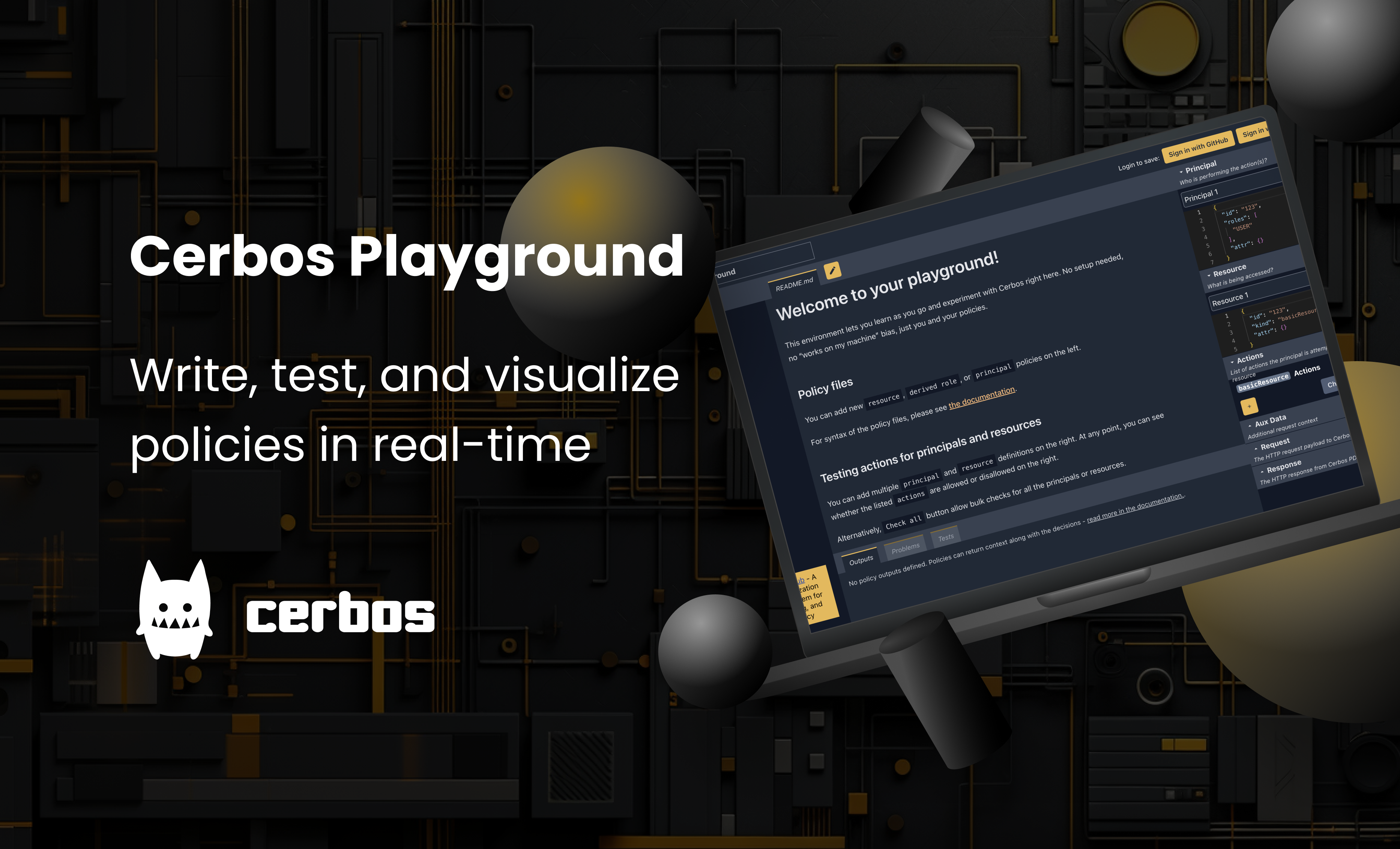
Cerbos Hub gives policy operations structure. It is the control plane for policy authoring UI, programmatic policy management, and interactive playgrounds.
Key takeaways
- Keycloak and ZITADEL both support SSO, MFA, and standards-based identity integration.
- Keycloak is usually the better fit for enterprise federation and legacy directory environments.
- ZITADEL is usually the better fit for cloud native teams, multi-tenancy, automation, and predictable upgrades.
- Keycloak can be heavy to tune, upgrade, and extend.
- ZITADEL has specific limits around LDAP interface support, app compatibility, and storage options.
- Cerbos PDP fits beside either IdP when authorization needs to become fine-grained, contextual, and auditable.
FAQ
Tagged in