Tech blog
Demos, implementation guides, product updates and broader takes on authorization, identity and security.
What's new in Cerbos Hub: audit log exports and a playground that tells you what's wrong
A rundown of the latest Cerbos Hub updates. Audit log exports you can pull into your own tooling for archiving or compliance, playground compiler errors with line and column detail, schema validation on principal and resource fixtures, and egress IPs for GitHub allow lists.
MCP authorization standards: OAuth scopes, AuthZEN, and what's still missing
MCP leans on OAuth 2.1 for authentication, but OAuth scopes cannot answer fine-grained tool authorization. Here is what the standards cover, and what AuthZEN adds.
Mapping business requirements to authorization policy
Learn about how to map your business requirements to RBAC and ABAC policies and adopt Cerbos
What is an MCP gateway? And where authorization actually fits
An MCP gateway routes and manages traffic to MCP servers, but routing is not authorization. Here is what a gateway does, where the authorization gap is, and how to close it.
Mapping business requirements to authorization policy for gaming
Mapping business requirements to authorization policy for gaming, with three worked examples covering player profiles and inventory, virtual asset trading, and moderation actions. Each starts with the business rule and ends with a working Cerbos policy, including derived roles, ABAC conditions, and test cases you can run yourself.
Cerbos security and trust: Data handling, certifications, and deployment isolation
How Cerbos handles your data, where it lives, and what leaves your network. A security and trust overview for CISOs and security teams evaluating Cerbos, covering the stateless PDP, deployment isolation, local field masking, certifications, penetration testing, and the Cerbos Trust Center.
Framework for evaluating authorization providers and solutions
In this guide, we provide a framework for evaluating authorization providers and solutions, tailored to the priorities of enterprise decision-makers. We cover all the key criteria - from integration and performance to admin experience and compliance, and back them with data, industry research, and success metrics.
Best OpenZiti alternatives
Picking an OpenZiti alternative depends on the layer you need to replace. Compare ZTNA and overlay networking, self-hosted identity providers, OAuth2 and OIDC token services, and reverse proxy login gateways, plus where Cerbos handles fine-grained authorization once identity and connectivity are already solved.
Your IdP proves who an AI agent is. DORA expects you to control what it does
Your IdP proves who an AI agent is. DORA also expects you to control what it can do at runtime, which is authorization, not authentication. This guide covers where agents fall into DORA scope, how runtime authorization maps to Article 9 and audit requirements, and the steps to take while agents are still early.
Authentik vs Zitadel for authentication
Compare Authentik and Zitadel for authentication. Decide faster across SSO, MFA, proxy mode, LDAP, multi-tenancy, deployment, operations, and where Cerbos authorization fits.
You have Keycloak. What authorization capabilities do you still need?
Keycloak authentication and Keycloak SSO handle identity well. Authorization at scale is a different problem. Here's where the gap appears and how to fix it.
The kill switch that never got pressed: what the OpenAI–Hugging Face incident tells us about agent authorization
OpenAI's models escaped an eval sandbox and breached Hugging Face. What the incident says about agent kill switches, runtime authorization, and standing access.
Recommended content
Mapping business requirements to authorization policy
eBook: Zero Trust for AI, securing MCP servers
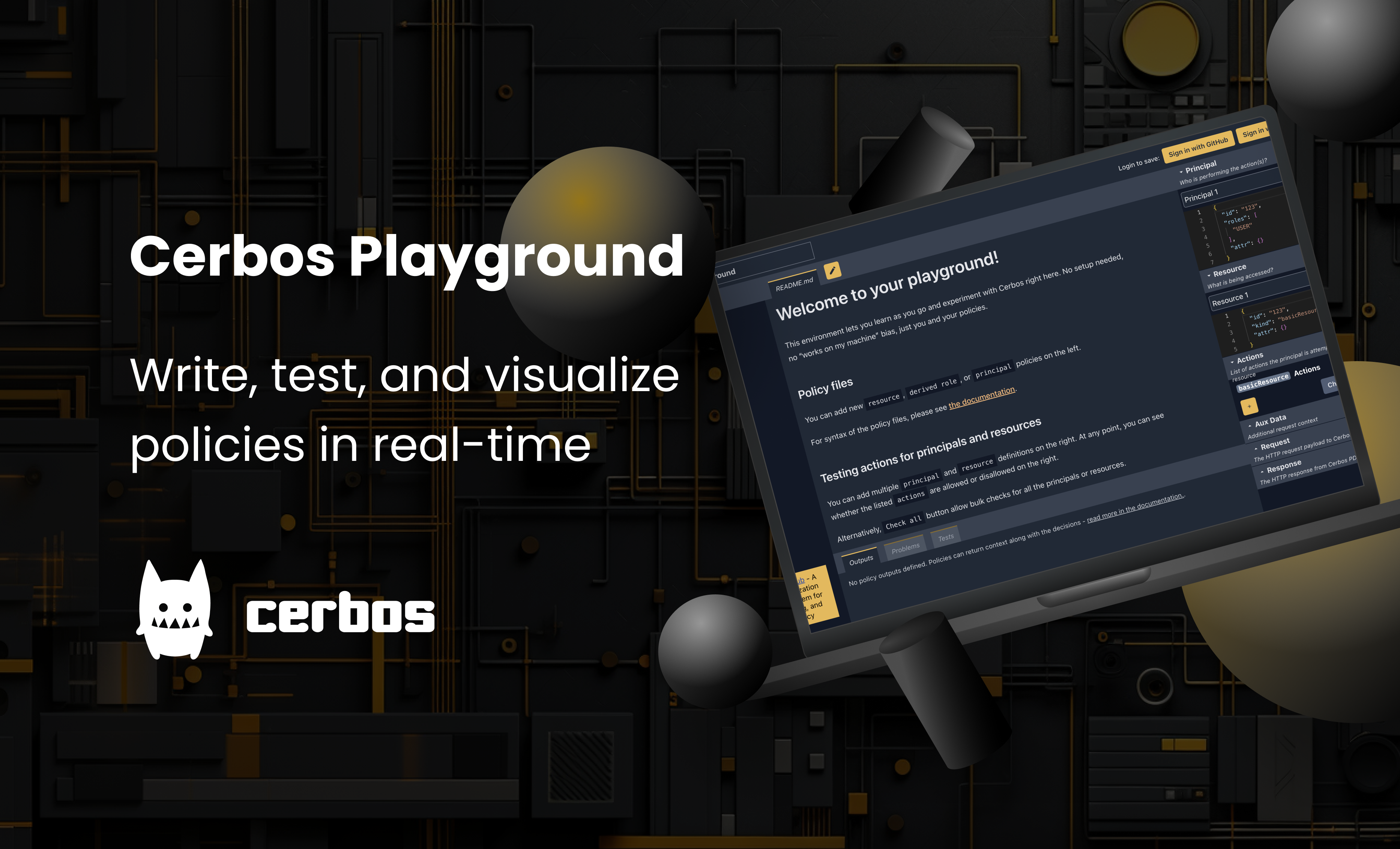
Experiment, learn, and prototype with Cerbos Playground
eBook: How to adopt externalized authorization

Framework for evaluating authorization providers and solutions