Most authorization starts simple. You have a handful of roles, an admin can do everything, a regular user can do less, and a role check in the right place keeps things tidy. Then the requirements arrive. A user should only see records from their own organization. A manager can approve expenses, but only under a threshold, and only for their own team. A support agent can read a customer record, but not the payment details, and only during an open ticket.
Roles alone stop being enough, and this is the point where teams reach for fine-grained authorization.
It matters more than it used to. OWASP ranks broken access control as the number one risk in web applications, ahead of every other category, and the 2025 IBM Cost of a Data Breach report put the global average breach at 4.44 million dollars. Broken access control is exactly the failure fine-grained authorization exists to reduce, users and systems reaching data they were never supposed to touch.
What fine-grained authorization actually means
Fine-grained authorization, sometimes called fine-grained access control or FGAC, is a way of controlling access based on the specific resource, the specific action, and the context around the request, rather than a single broad attribute like a role. Access is granted or denied based on a combination of attributes and conditions, which means the same user can be allowed to do one thing and blocked from another depending on the details.
A coarse-grained check asks "is this user an admin". A fine-grained check asks "can this user approve this document, given that they own it, it's under the approval limit, and it's still within business hours". The decision depends on who is asking, what they're trying to do, which resource they're acting on, and the state of the world at that moment.
That granularity is why fine-grained authorization shows up in regulated and data-sensitive settings such as healthcare, financial services, and multi-tenant SaaS, where letting the wrong person see the wrong record is a compliance problem, not just a bug.
Fine-grained vs coarse-grained access control
The clearest way to understand fine-grained authorization is next to its opposite.
Coarse-grained access control grants or denies access on a single factor, usually a role, and it's fast to set up and easy to reason about. It falls short when different users need access to very specific slices of the system, because a role can't express "only their own data" or "only under these conditions" without multiplying into dozens of narrow roles.
Fine-grained access control trades some of that simplicity for precision. It can factor in role, department, resource ownership, data sensitivity, location, time, and request context, all in a single decision. The cost is that it takes more thought to design and more infrastructure to enforce well.
We go deeper on the trade-off in coarse-grained vs fine-grained access control, which walks through where each one fits.
Most systems end up using both. Coarse roles handle the broad strokes, and fine-grained rules handle the cases where a role isn't specific enough.
The models behind fine-grained authorization
Fine-grained authorization isn't a single technique, it's a category. A few access control models sit underneath it, and real systems usually blend them.
Role-based access control is the familiar baseline. It's coarse on its own, but it's still the starting point most teams build on, and roles remain a useful input to a finer decision.
Attribute-based access control, or ABAC, is where fine-grained authorization usually lives. Decisions draw on attributes of the user, the resource, and the environment, so you can express rules like "a claims adjuster can view a claim in their region that isn't flagged as sensitive". This is what gives ABAC its flexibility.
Policy-based access control, or PBAC, takes the attribute idea and centralizes the rules into explicit policies that live outside the application. Instead of logic scattered through the code, the conditions are written down in one place, versioned, and reviewed like any other artifact. Relationship-based models, which decide access from the graph of connections between users and resources, are another approach some systems use, though they come with their own operational weight.
In practice, the useful question isn't which acronym you pick, it's whether your rules can express the conditions your product actually needs, and whether they're maintainable once you have hundreds of them.
How fine-grained authorization works
Underneath the models, most fine-grained systems evaluate the same shape of question. A request comes in describing a principal (who is asking), an action (what they want to do), and a resource (what they want to do it to), usually along with some context like the time or the request's origin. The authorization layer checks that request against a set of rules and returns allow or deny.
The attributes are what make it fine-grained. The principal carries attributes such as role, department, and team. The resource carries its own, like owner, status, or sensitivity level. Conditions then combine these, and this is where the real expressiveness lives, because a condition can run actual logic. It can compare the requester's team to the resource's owner, check an amount against a limit, or require that a ticket is still open. The same infrastructure that answers a simple role check can answer a rule with half a dozen interacting conditions.
Because the decision is data-driven, the same policy handles cases that would otherwise require a new role for every combination. That's the core win. You describe the rule once, and it applies across every user and resource that matches.
Where you enforce it
Fine-grained authorization has to run somewhere, and there are a few common places.
Some systems enforce it deep in the data layer with row, column, and cell-level security, so a query only ever returns rows a user is allowed to see.
Others enforce it at an API gateway, at the service boundary, or inside the application before an action runs.
A growing pattern is to move the decision out of the application entirely and into a dedicated authorization service, a policy decision point that every part of the system can call, so the same rules apply consistently whether the request comes from a web app, a mobile client, or a machine.
There's also the filtering problem. It's one thing to check whether a user can open a single record, and another to list only the records they're allowed to see out of a million. Doing that with per-row checks is slow, which is why fine-grained systems often produce a query filter the database can apply directly rather than checking each row after the fact.
Common use cases
Fine-grained authorization tends to become unavoidable in a few situations.
Multi-tenant SaaS is the classic one. Every tenant's data has to stay isolated, and within a tenant, different users need different slices, so "same role, different data" is the default rather than the exception.
Regulated industries are another. Healthcare and financial platforms deal with records where access has to be justified per-record, often to satisfy SOC 2, ISO 27001, HIPAA, GDPR, or PCI DSS. Fine-grained rules and the audit trail they produce are how teams show who accessed what and why.
More recently, AI systems have pushed the same need. When an agent acts on a user's behalf, or a retrieval-augmented generation pipeline pulls documents into a prompt, the system has to enforce that the underlying user can actually see every document involved. The same logic applies to MCP servers exposing tools and data to models. Coarse roles don't cut it when the thing making the request isn't a person.
The benefits, and the honest trade-offs
The benefits are straightforward. Fine-grained authorization enforces least privilege in a real way, granting exactly the access a task needs and nothing more, which shrinks the blast radius when an account is compromised. It maps cleanly to compliance requirements, and because decisions are explicit, it produces the kind of audit trail that regulators and security teams ask for. Above all it lets a product express access rules that match how the business actually works, instead of forcing the business to fit a handful of rigid roles.
The trade-offs are real too. Fine-grained rules take more design effort up front. Done badly, they can slow requests down, since every action now involves a decision. And if you build it yourself, the logic tends to sprawl across services and become the thing nobody wants to touch. This is the failure mode that pushes teams toward a dedicated approach rather than a homegrown one.
For guidance on whether to build or buy an authorization solution for your specific use case - feel free to read this blog.
Implementing fine-grained authorization without building your own engine
The instinct is often to build fine-grained authorization in-house, because early on it looks like a few if-statements. It rarely stays that way. As the product grows, the conditions multiply, the same rule gets reimplemented in three services, and every permission change turns into a code change and a deploy. Authorization quietly becomes a maintenance burden that has nothing to do with your product.
The alternative is to treat authorization as externalized infrastructure. This is what Cerbos does. Policies are written in human-readable YAML with conditions expressed in a straightforward expression language, and they live in a stateless decision point your services call over an API. The rules sit outside your codebase, so a permission change is a policy update rather than a release, and product or security teams can own them without pulling engineers back in. Because the policies are version-controlled, they're reviewed and tested like any other code, and Cerbos supports RBAC, ABAC, and policy-based rules together so you can start coarse and add precision where you need it.
For the listing problem, Cerbos can return a query plan that your database applies as a filter, so fetching "only the records this user can see" stays fast even at scale. And because every decision runs through one place, you get a consistent audit log of who was allowed to do what across the whole system.
Where to start
If your roles are starting to multiply, or you're copying permission checks between services, or a new access requirement means another deploy, that's the signal you've outgrown coarse-grained access control.
Fine-grained authorization is how you get precise access rules without the role explosion, and externalizing it is how you keep those rules maintainable as the system grows.
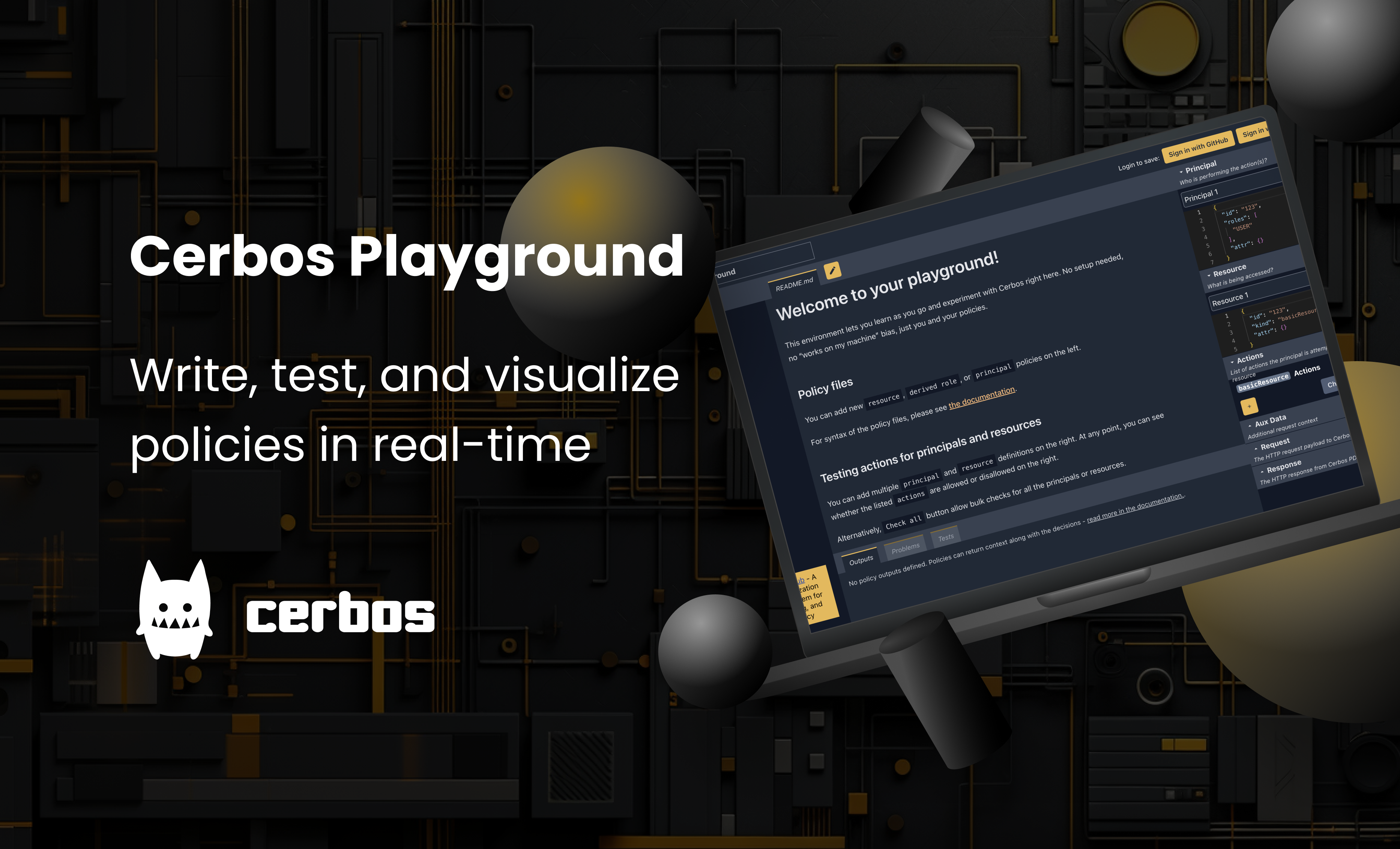
Try Cerbos to write, test, implement and manage fine-grained policies, or book a call to talk through your access model with the team.
Go deeper:
- How to adopt externalized authorization (eBook) for a step-by-step playbook on moving authorization out of application code
- Coarse-grained vs fine-grained access control (Blog) for a closer look at when each one fits
FAQ
Tagged in