Tech blog
Demos, implementation guides, product updates and broader takes on authorization, identity and security.

Staying compliant - What you need to know
Staying on top of compliance has become essential for businesses today. In this article we examine the key elements of compliance that should be prioritized, from data quality and change management to audit logs and access control. We also explore how picking the right authorization system can strengthen your compliance efforts.
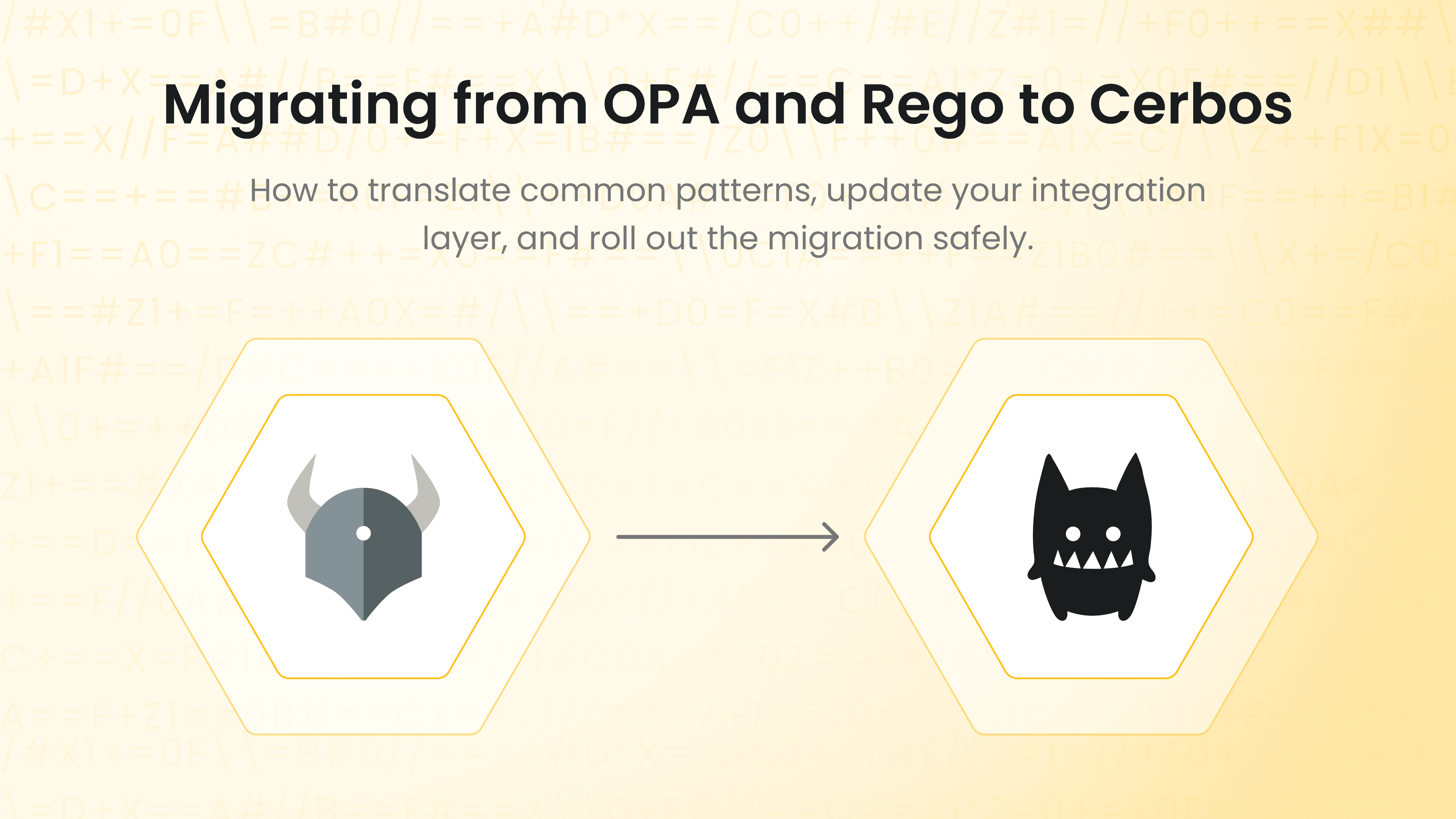
Migrating from OPA and Rego to Cerbos
Learn how to migrate from from OPA and Rego to Cerbos. This guide walks you through the differences, how to translate common patterns, how to update your integration layer, and how to roll out the migration safely.
Broken access control still tops the list: OWASP top 10 2025
Learn why Broken Access Control remains the top OWASP 2025 risk and how Cerbos provides scalable, fine-grained authorization to prevent object-level and contextual access failures.
Platform engineering leaders are racing to enable AI safely - takeaways from KubeCon NA 2025
Discover how platform engineering leaders at KubeCon NA use a three-lane model, sandboxes, and shift-down security to accelerate safe AI adoption, govern AI agents, and protect developer velocity.
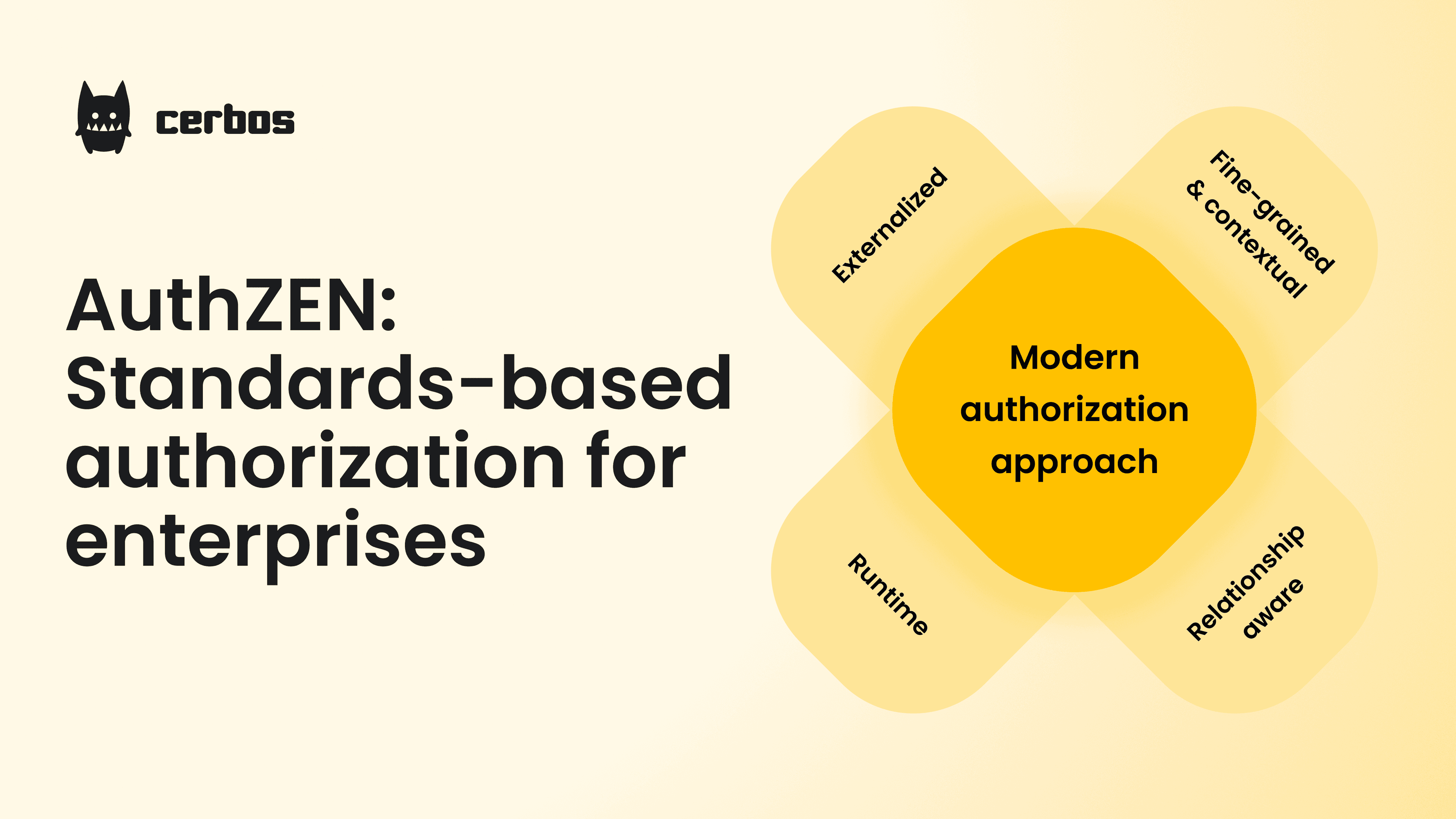
AuthZEN: Standards-based authorization for enterprises
Authorization used to lack the standards authentication gained with OAuth and OpenID. AuthZEN, backed by the OpenID Foundation, introduces a unified model for externalized, fine-grained, and interoperable access control. Discover how Cerbos supports AuthZEN to deliver modern, standardized enterprise authorization.
What ISC2 congress 2025 made clear about modern compliance
ISC2 Congress 2025 highlighted the shift from policy documentation to policy as code. Learn how security leaders are implementing continuous compliance, governing AI systems, quantifying cyber risk, and embedding enforcement directly into infrastructure for measurable, auditable security controls.
Automate Cerbos policy uploads with the cerbos-store-action GitHub Action
Automate your authorization workflows with the new Cerbos Store Action for GitHub. Synchronise your policy files with Cerbos Hub automatically in CI/CD - no manual scripts or Docker commands needed.
Mapping business requirements to authorization policy in HR systems
Best practices for translating business requirements into authorization policy for your Human Resources (HR) system. We walk through the process of reviewing business requirements, analyzing them, defining policies, and ultimately deploying them to production systems as efficiently as possible.
Mapping business requirements to authorization policy for insurance
Explore how insurance companies can combat fraud with modern authorization. This guide explains PBAC in action across auto, life, and property insurance; with practical examples and policy templates to help you implement secure, fraud-resistant access control in your organization.
Run Cerbos natively inside AWS Lambda
Deploy Cerbos directly in AWS Lambda-either as a standalone function or as a lightweight extension layer-while using Cerbos Hub for centralized policy management and audit-logging.
Cerbos PDP v0.47.0: AWS Lambda support, Git-aware Hub uploads, and smarter schema diagnostics
Run Cerbos anywhere. v0.47 adds native AWS Lambda support, Git-integrated policy uploads, richer schema errors, and performance improvements.
Streamline authorization by leveraging JWT claims in Cerbos
Learn how to use Cerbos to verify JWTs with your JWKS, then read claims directly in policy conditions, no custom code, fast to production.
Recommended content
Mapping business requirements to authorization policy
eBook: Zero Trust for AI, securing MCP servers
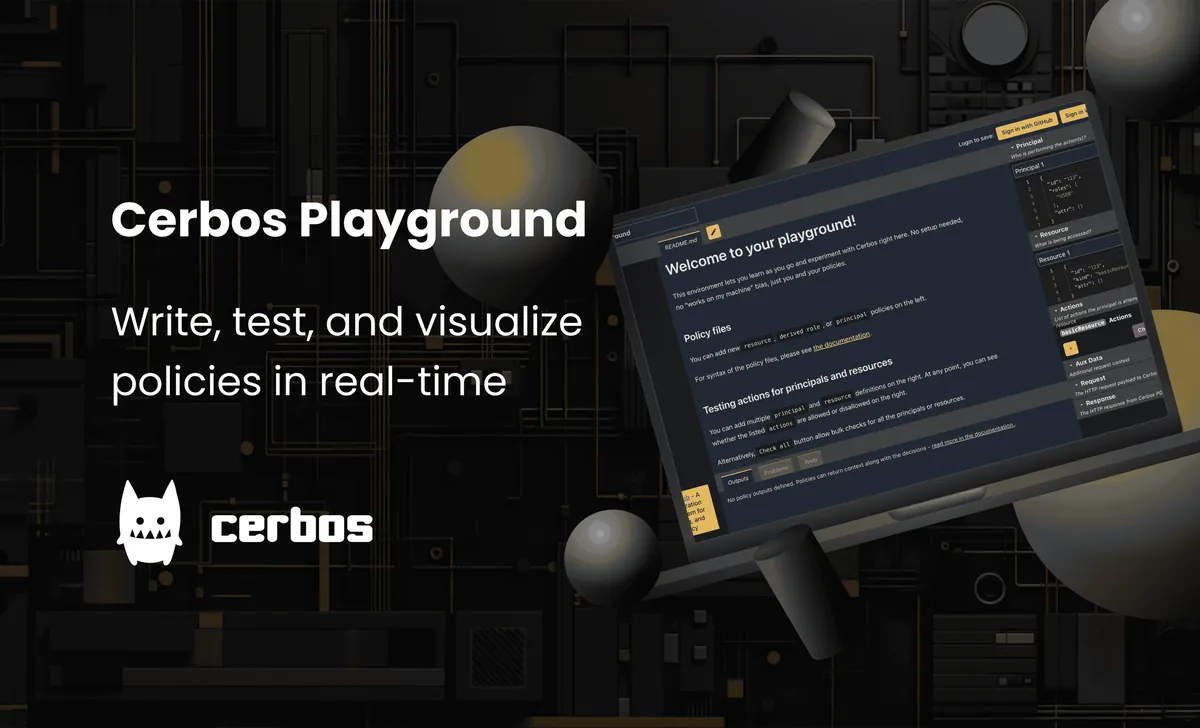
Experiment, learn, and prototype with Cerbos Playground
eBook: How to adopt externalized authorization

Framework for evaluating authorization providers and solutions