Guide
All articles tagged Guide.
Zero trust has reached operational reality
Zero Trust is no longer theoretical. Discover how mature identity standards and centralized authorization transform Zero Trust from strategy to execution, delivering continuous compliance, reduced breach impact, and faster, more secure development.

Modern application architecture trends: AI, microservices, and pragmatic security
Explore modern application architecture trends for AI-driven infrastructure, modular monoliths, microservices, and pragmatic security, as well as patterns shaping cloud, on-prem, and hybrid systems.

Zero-Trust for microservices, a practical blueprint
Learn how to implement a Zero-Trust security model for microservices. Discover how to secure service-to-service communication, manage workload identities, and enforce fine-grained authorization across distributed systems, AI agents, and APIs.
How to implement resource-based authorization
Learn how to implement resource-based authorization for fine-grained, contextual access control. Compare it to role-based and attribute-based models, explore real-world use cases, such as in microservices and multi-tenant SaaS applications.
What is access control?
Learn what access control is, why it’s essential, and how it operates within application environments. We’ll also explore some common challenges developers face when implementing access control and review the types of technologies that can streamline the process.
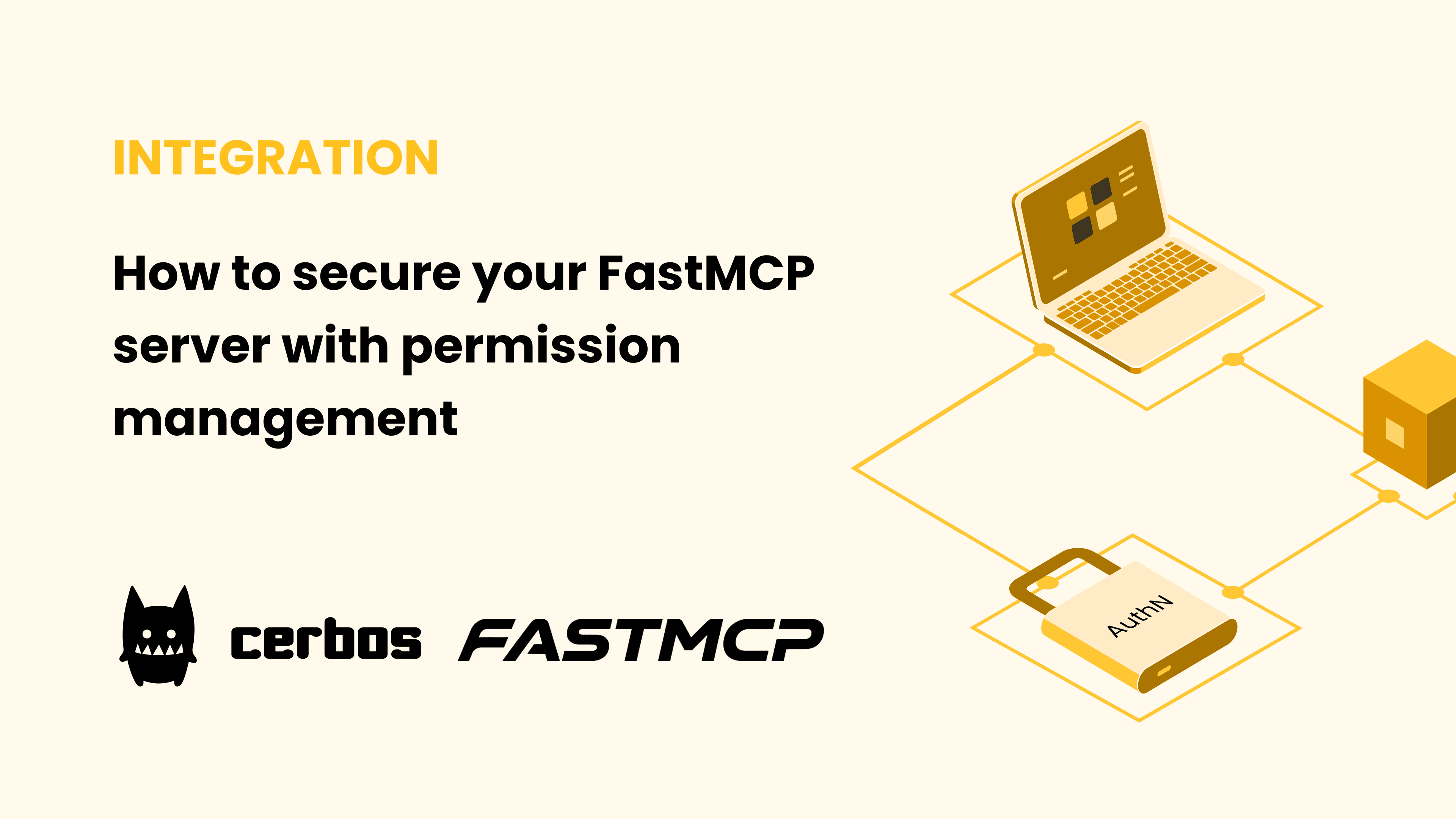
How to secure your FastMCP server with permission management
FastMCP is a Python framework for building production-ready MCP servers with minimal code. Without authorization, these servers risk exposing all tools to every user. The **cerbos-fastmcp** middleware adds policy-driven, fine-grained access control to secure FastMCP deployments.
NHI security: How to manage non-human identities and AI agents
Discover NHI security: How to manage non-human identities and AI agents with practical principles. Learn strategies for inventory, least privilege, access controls, and authorization to secure NHIs and prevent AI risks in modern enterprises.

MCP security & AI agent authorization. A CISO and architect’s guide to securing the new AI perimeter.
MCP security and AI agent authorization are critical to protecting enterprise data. This guide explores risks, the “confused deputy” problem, and how externalized authorization builds a zero trust model to secure the new AI perimeter without slowing innovation.
Mapping business requirements to authorization policy for medtech
Learn how to translate business requirements to authorization policy for medtech. Decouple authorization to keep medtech platforms compliant (HIPAA, GDPR, FDA 21 CFR Part 11, NHS RBAC), resilient to updates, and safe. Explore break-glass access, audit logs, role-based control, and an example case study.
Filtering database results with Cerbos query plans
Learn how Cerbos PlanResources API uses partial evaluation to streamline authorization. Discover how query plans translate into efficient database filters, boost performance, and simplify access control with custom adapters.
Service-to-service authorization: A guide to non-user principals
Read this article to understand what non-user principals are, when you might need them, and how they relate to service-to-service authorization.
Making Cerbos policies bulletproof with schemas
Learn how JSON schemas make Cerbos policies more reliable, secure, and easy to maintain. Catch integration errors early, prevent attribute injection attacks, and create bulletproof authorization for your applications.
Designing an authorization model for an enterprise
Learn how to design an authorization model for an enterprise. An authorization model plays a vital role in securing an enterprise’s sensitive data. Businesses often code additional custom logic on top of traditional access control solutions, like Active Directory. However, as businesses grow, they need access control that can scale to match their growth.
Why using GitOps for authorization and access control is a good idea
Getting developers working in harmony is no easy task. Tools like GitHub make it much easier to manage code, but as infrastructure and deployment become more complex, issues arise with the systems projects are built on.
Mapping business requirements to authorization policy for fintech
Best practices for translating business requirements into authorization policy for your fintech. We walk through the process of reviewing business requirements, analyzing them, defining policies, and ultimately deploying them to production systems as efficiently as possible.
Making application authorization context-aware with Cerbos outputs
Discover how Cerbos outputs turn binary authorization into rich, contextual decisions. Enable audit trails, rate limits, emergency access, and user guidance - without scattered code or compliance gaps.
The productivity paradox of AI coding assistants
AI coding assistants promise speed, but do they deliver? Explore data, developer insights, and security risks showing why AI feels faster but often slows production. Learn where tools like Cursor and Claude Code help, and where they fail.
Stop trusting your employees. Uber's "God view" proves you can't
Uber’s ‘God View’ exposed the dangers of unchecked internal tools. Learn why coarse admin access, weak audit trails, and hard-coded authorization are ticking time bombs—and how externalized authorization with Cerbos prevents abuse, ensures compliance, and protects sensitive data.